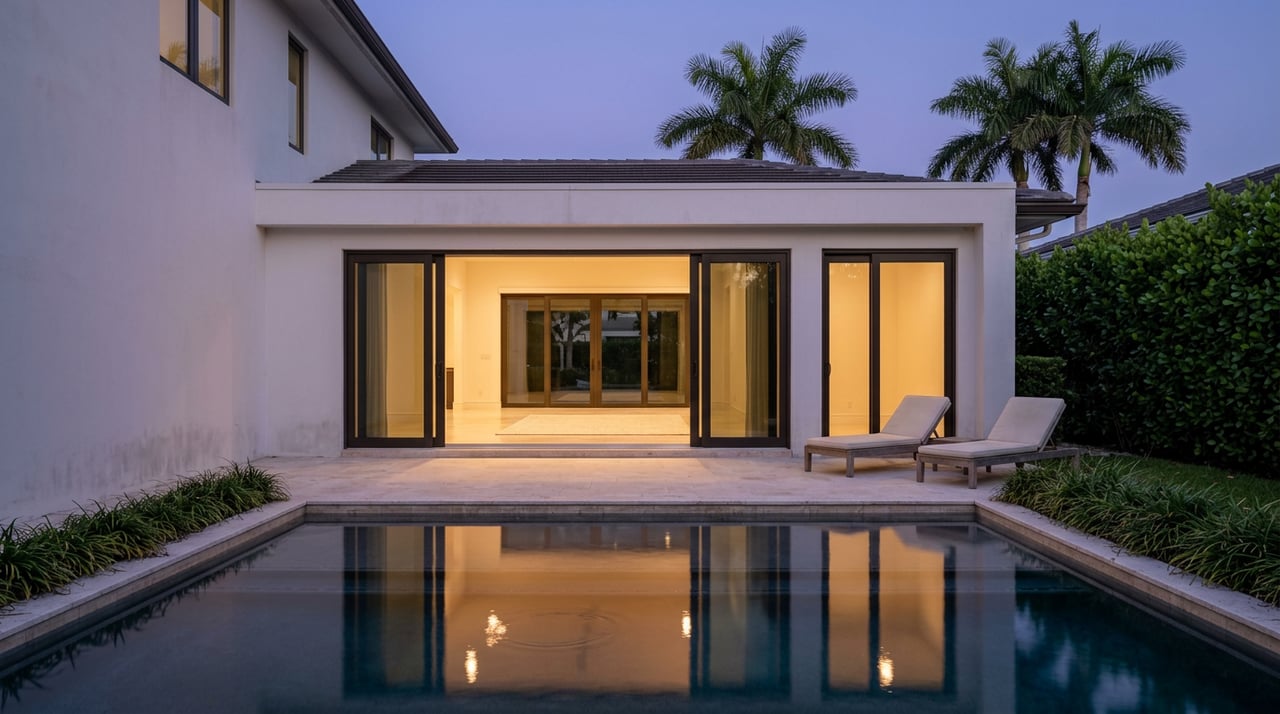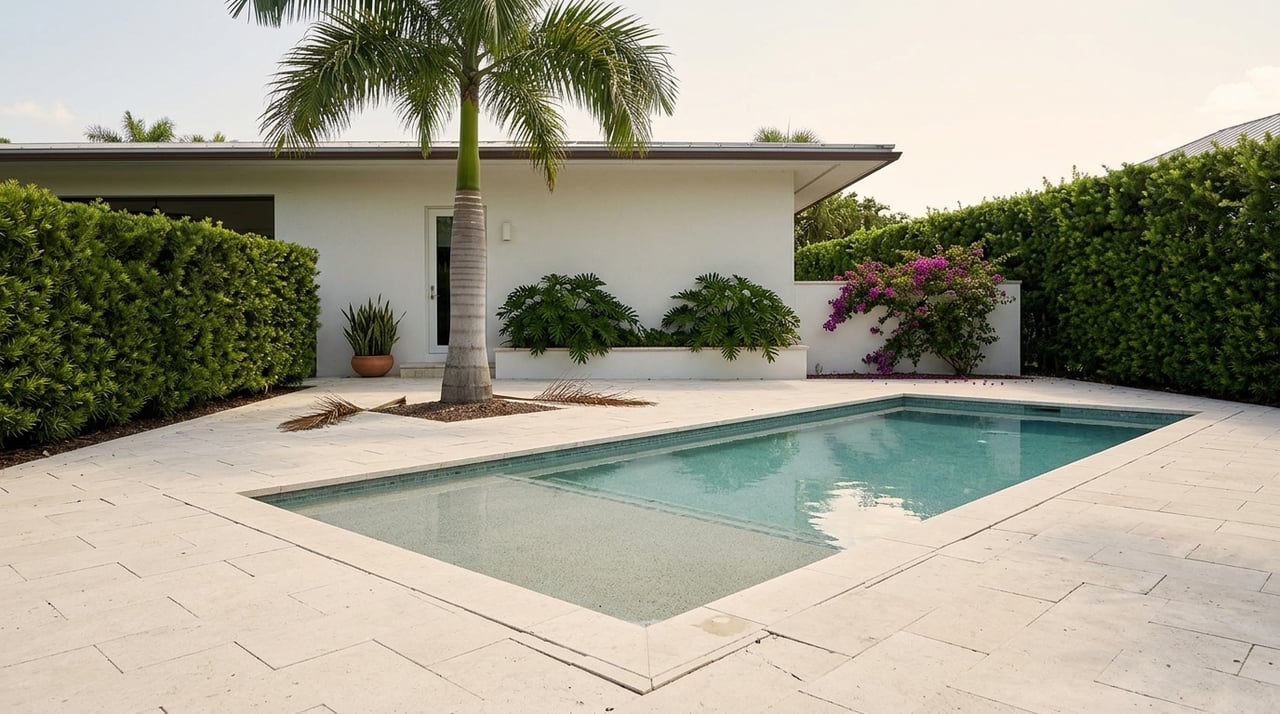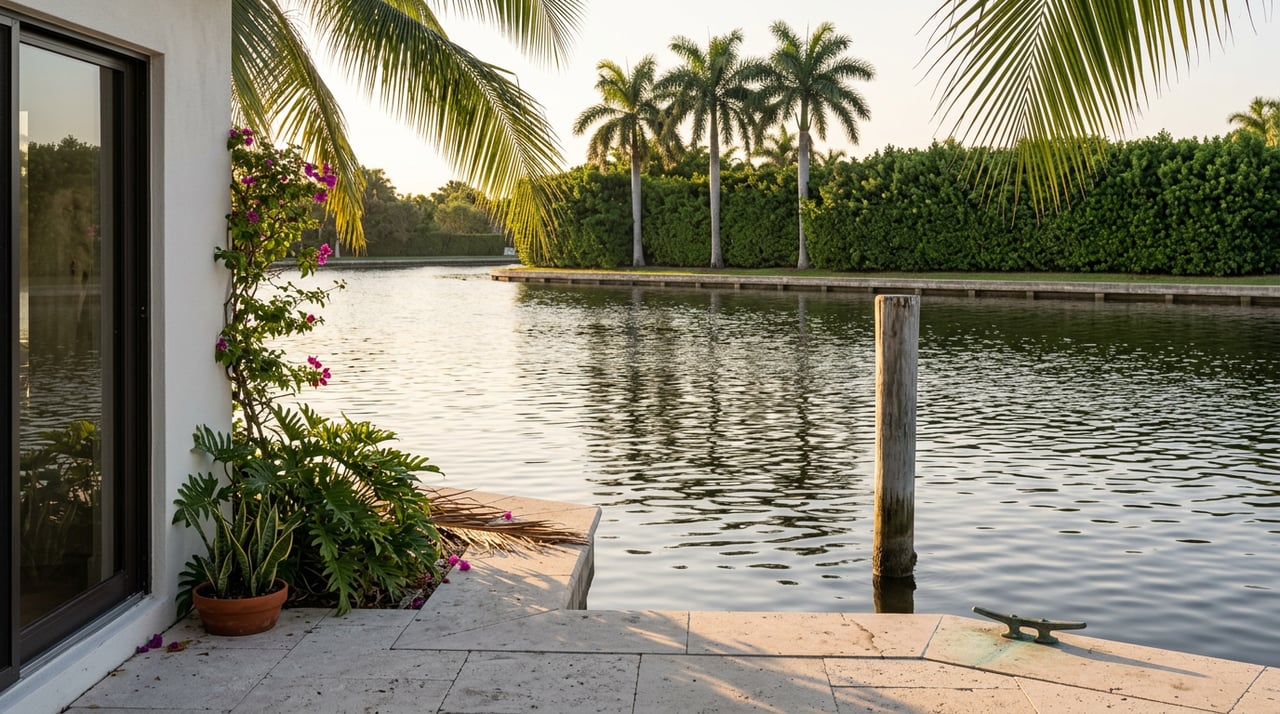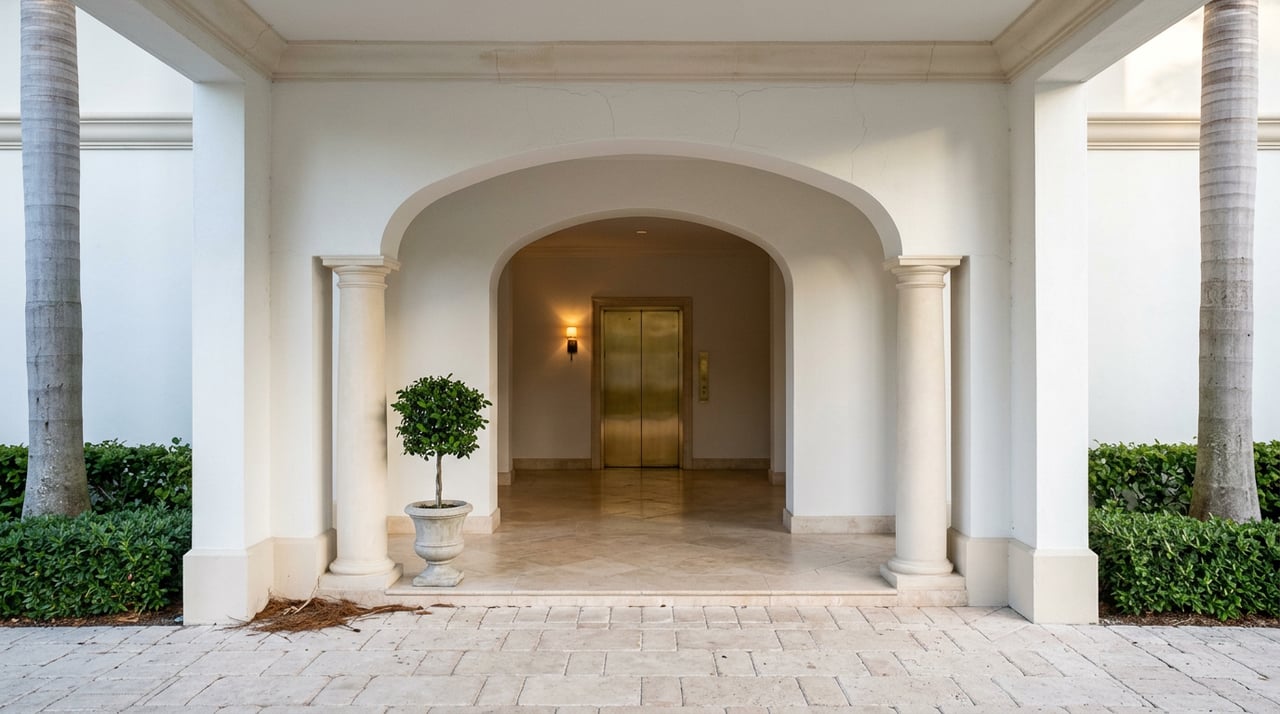
A buyer looks at a two-bedroom cooperative apartment at 2600 South Ocean Boulevard, offers close to asking, and gets a signed contract back within days. By any normal measure, the deal is done. Except in a Palm Beach cooperative building, the contract is only the first signature. The second one belongs to a board of directors who owe the buyer no explanation if they say no, and who can take weeks to say anything at all.
That building, put up in 1977, is one of two co-ops currently on the market on South Ocean Boulevard, alongside a building a few blocks north at 2100 South Ocean Boulevard built in 1980. Walk a few doors in either direction and the listings look nearly identical to Harbour House or Concordia, both of which are condominiums, not cooperatives. Those two buildings sit under Chapter 718 of the Florida Statutes rather than Chapter 719, and that single difference in ownership structure, invisible on the listing sheet, is what actually determines whether a signed contract means anything. More than 1,200 cooperative apartment units sit across the Town of Palm Beach, according to a Florida title insurance firm that has closed transfers in the state's cooperative buildings for years, and on paper every one of those listings looks like a condo listing: same square footage, same ocean view, same asking price format. What's different is what the buyer is actually purchasing, and who gets to veto the sale after the contract is signed.
Shares, Not a Deed
Florida's Cooperative Act, Chapter 719 of the Florida Statutes, sets up a structure that has nothing to do with what most buyers picture when they think about real estate closing. In a condominium, a buyer's name goes on a recorded deed. In a cooperative, the corporation that owns the entire building sells the buyer shares, and those shares come with a proprietary lease granting the right to occupy a specific unit. No deed changes hands. Title insurance, when it's available at all, has to be built around the building's own governing documents rather than a standard chain of title, and the answer varies from one Palm Beach co-op to the next.
That distinction sounds technical until it collides with a closing date. A condo association in Florida operates under statutory timelines for reviewing buyer applications and delivering documents. A cooperative board does not. Its proprietary lease typically requires board consent for any transfer of shares, and that consent process runs on the board's calendar, not the buyer's.
The Application That Has No Fixed Clock
What a Palm Beach co-op board actually asks for is closer to a private membership review than a real estate closing. Buyers are commonly asked for full financial statements, tax returns, bank statements, personal and professional references, and an in-person interview with the board or its admissions committee. Boards can set their own liquidity standards, sometimes requiring reserves well beyond the purchase price, and they retain broad discretion to reject an applicant without stating why. Courts and industry guidance both treat that discretion as largely unchallengeable, which is the same posture cooperative boards take in Manhattan, where the co-op structure is more common but the rejection dynamics are nearly identical.
Financing compounds the timeline risk. Fewer lenders offer co-op share loans than offer conventional condo mortgages, and where financing is permitted, boards commonly expect down payments in the 20 to 50 percent range or higher. FHA and VA loan programs generally do not apply to co-op shares at all. Some Palm Beach co-op buildings restrict financing outright or leave the question silent in their governing documents, and a title company that has closed transfers in more than 250 South Florida cooperative buildings has noted that willingness to sign the lender's recognition agreement varies from one board to the next. A buyer who assumes a mortgage pre-approval will carry the same weight it does on a condo purchase can find that assumption wrong the moment the board package lands on the admissions committee's desk.
Here's how the two structures compare on the points that actually affect a Palm Beach closing:
| Condominium | Cooperative | |
|---|---|---|
| What you receive | Recorded deed to the unit | Shares plus a proprietary lease |
| Governing law | Chapter 718, Florida Statutes | Chapter 719, Florida Statutes |
| Board review | Application and background check, statutory timelines apply | Full financials, references, interview, no fixed timeline |
| Financing | Conventional, jumbo, sometimes FHA/VA | Share loans only, fewer lenders, FHA/VA generally excluded |
| Buyer's real leverage after contract | Association has limited grounds to block a qualified buyer | Board can decline without stating a reason |
The Building's Own Reserves Just Stopped Being Optional
There's a second layer to this that has nothing to do with the buyer's application and everything to do with the building itself. Florida's Senate Bill 4-D, passed in 2022 and refined by SB 154 in 2023 and HB 913 in 2025, requires milestone structural inspections and Structural Integrity Reserve Studies for any residential building three stories or higher, and the statute is explicit that it applies equally to condominiums and cooperatives. Most of Palm Beach's storied co-ops, built in the 1960s through the 1980s, are well past the age thresholds that trigger those requirements.
The reserve funding piece is where it bites hardest. For association budgets adopted on or after December 31, 2024, a board can no longer vote to waive or underfund reserves for the structural components a SIRS identifies. Buildings that had been coasting on minimal reserves were required to begin funding according to their reserve study starting January 1, 2026, and any Structural Integrity Reserve Study still outstanding has to be completed no later than December 31, 2026. In practical terms, a board that has spent decades screening buyers on liquidity and references is now also legally required to be screening its own building's structural finances, with personal fiduciary exposure for directors who fail to comply.
That means a buyer evaluating a Palm Beach co-op in 2026 is really underwriting two separate things at once: whether the board will accept them, and whether the building's reserve math is current enough to avoid a special assessment landing in their first year of ownership. Neither of those shows up on a listing sheet, and neither is optional to check.
What Happens When a Building Can't Carry the Weight
The consequences of an aging co-op that can't reasonably fund its own future aren't hypothetical on the island. In November 2025, the Palm Beach Town Council approved a redevelopment plan for the Ambassador Hotel & Residences tower on the South End, along with an adjacent lakefront cooperative building in the same 2700 block of South Ocean Boulevard. The approved plan replaces the site's existing 135 units with three mid-rise buildings totaling 41 units.
A building doesn't reach that point overnight. Somewhere along the way, a co-op board weighing the cost of milestone inspections, mandatory reserve funding, and deferred maintenance against what a developer will pay for the land underneath it decides the math favors selling the whole building rather than fixing it unit by unit. For a buyer looking at a Palm Beach co-op today, that's the long-run version of the same question the board is already asking in every admissions interview: can this building, and the people in it, actually carry what's coming.
Before You Write the Offer
A buyer who wants to avoid a surprise on either front has real, specific homework to do before a contract goes out, not after.
- Ask the listing agent directly whether the building is a condominium or a cooperative, since the two can look identical in marketing materials.
- Request the proprietary lease, bylaws, and share transfer procedures, along with the board's stated financial requirements, before writing an offer.
- Ask how long the board's approval process has taken for recent buyers in that specific building, since timelines vary widely and a standard 30 or 45-day closing window may not be realistic.
- Request the building's most recent milestone inspection report and Structural Integrity Reserve Study, and confirm whether reserves are currently funded at the level the study recommends.
- Build a financing contingency and closing timeline around the board's actual process, not a generic Florida closing calendar.
Frequently Asked Questions
Can a Palm Beach co-op board reject a buyer without giving a reason? Boards generally retain broad discretion to decline a proposed buyer, and that discretion is not typically subject to challenge. That is a meaningfully different position than a condominium association operates from under Florida law.
Do all Palm Beach co-ops require all-cash purchases? Not universally, but financing options are narrower than for condos. Some buildings restrict or discourage financing outright, and where loans are permitted, down payment expectations are commonly higher than a conventional condo mortgage would require.
Does the 2026 reserve mandate apply to every Palm Beach co-op building? The Structural Integrity Reserve Study and milestone inspection requirements apply to residential buildings three stories or higher under Chapter 719, which covers the great majority of Palm Beach's oceanfront and in-town cooperative stock given their age and construction.
How long should a buyer expect a co-op board approval to take? There is no statutory clock, and the timeline is set by the individual building's admissions process and meeting schedule. Buyers should ask the specific building's management or board directly rather than assume a standard window.
Buying into a Palm Beach cooperative is not a transaction that ends when the contract is signed. It's a transaction that ends when a board decides, on its own schedule, that the buyer and the building are a fit for each other. If you're weighing a purchase in one of these storied buildings, or trying to make sense of what a specific board or reserve study means for your timeline, Debbie Gross can walk through the building-specific questions before you write the offer, not after. Schedule a free consultation to start.