A buyer walks the property, reads the listing, and prices what they see. A seller prices what they own. Both are working from the same visible facts. Neither is pricing the file the Town of Palm Beach keeps on the address, and that file is often worth more than the pool deck.
The thesis of this piece is simple. On the island of Palm Beach, the gap between an appealing renovation-ready list price and the actual cost of getting to keys is set by three review-risk items that a document-literate buyer can request, quantify, and negotiate before writing an offer. A seller who assembles those same items before listing narrows the buyer pool but tightens the price. Everyone else is guessing.
The mechanism, in one paragraph
The Town of Palm Beach reviews exterior work through two commissions. The Architectural Commission, known as ARCOM, reviews modifications to any existing structures visible from public rights-of-way, new construction, and landscaping, with seven members and three alternates appointed by the Town Council. The Landmarks Preservation Commission, or LPC, handles designated landmarks and properties in historic districts under Chapter 54 of the Town Code. Over 328 landmark properties, sites, and vistas are protected under that ordinance, first adopted in 1979 and descended from the 1920s Art Jury whose original members included Addison Mizner, Marion Sims Wyeth, and Maurice Fatio. That lineage is not decorative. It is the reason the review culture is stringent, deliberate, and slow, and it is not going to loosen because your closing date has slipped.
The three files that reprice the deal
A trophy home listed as renovation-ready is really three separate assets. The house, the lot, and the file. Before writing an offer, request the following from the seller or the Town's Planning, Zoning and Building Department.
1. The COA history and any prior LPC staff memos. A Certificate of Appropriateness is the LPC's approval for exterior work on a landmark or contributing structure, and no building permit issues for regulated exterior work without one. Prior memos disclose what the Commission has already told a previous owner about the property. They flag windows, roof profiles, and elevations that Commission members have opinions about, and those opinions carry between owners.
2. Any pending ARCOM or LPC file numbers. The Town's public agendas post pending applications by parcel. The May 27, 2026 ARCOM meeting deferred an application at 1300 N Ocean Blvd covering window and door replacement with fenestration relocation and a landscape open space variance, and carried forward pending applications at 142 Casa Bendita, 1066 N Ocean Blvd, 222 Cherry Lane, and 121 Woodbridge Road, per the Town's CivicClerk agenda. A pending file that predates your contract can either accelerate your renovation timeline or force you to inherit a scheme you did not design.
3. Historic-district status and CCCL jurisdiction. Much of Midtown, the Sea Street area, and the El Brillo corridor in the South End sit inside a historic district, and the North End contains pockets of overlay protection. Waterfront parcels also trigger the Florida Coastal Construction Control Line process through the Florida Department of Environmental Protection, which can run in parallel with Town approvals when properly sequenced or add three to five months of idle time when it does not.
If a seller cannot produce items one and three inside 48 hours, the property has not been prepared for sale. That is a negotiating position, not a complaint.
Where the review actually bites
Two categories of change catch out-of-market buyers off guard.
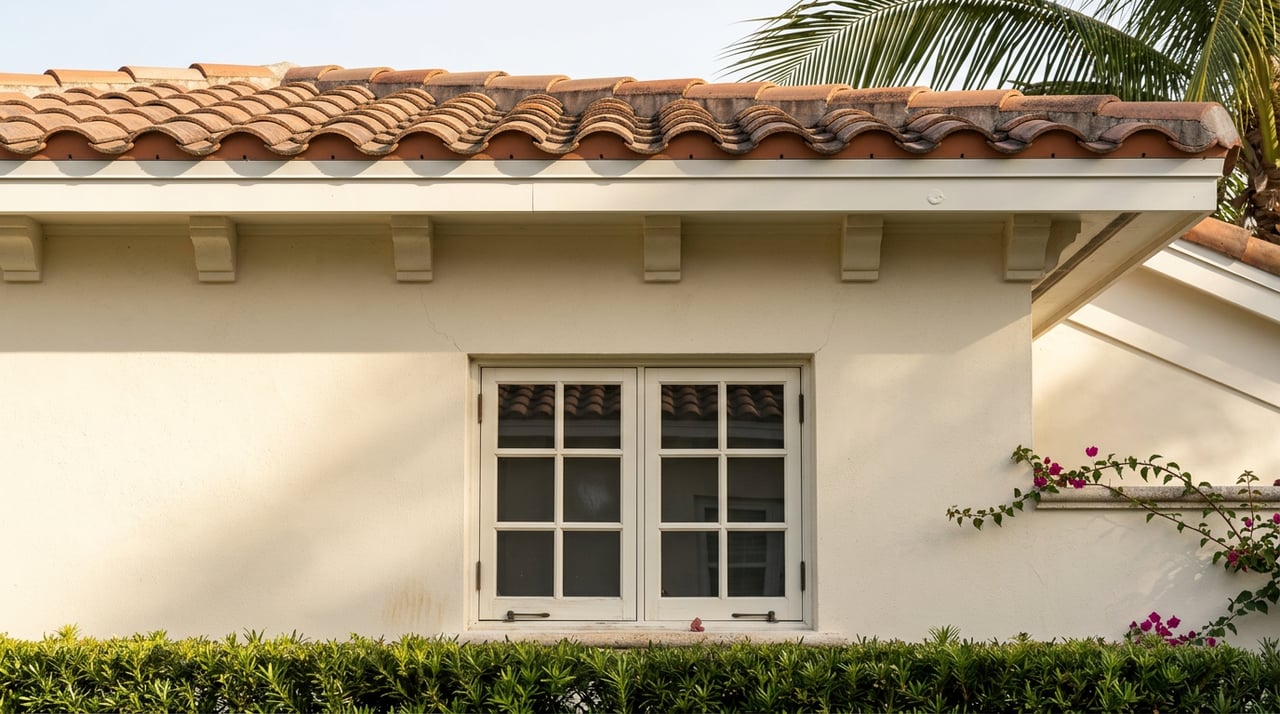
Roof and window replacements. On a contributing structure, replacing a historically significant slate or clay tile roof with asphalt shingles requires full Commission review and is routinely denied. In-kind replacement using matching materials qualifies for administrative review. Even a barrel-tile-to-Spanish-S roof swap goes on a public agenda, as the pending item at 121 Woodbridge Road shows. Aluminum replacement windows that alter the profile, glazing bar pattern, or reflectivity of original wood windows are not approvable on contributing structures without compelling evidence that the original units cannot be repaired. Impact glazing is possible, but through compatible wood-framed systems or interior storm systems, not stock aluminum.
Demolition. Demolition of a contributing structure requires its own LPC review, and denial is common for buildings that predate 1965 in the overlay. The Commission may also evaluate the historic significance of any structure more than 50 years old regardless of designation status before approving a demolition permit. A buyer planning to tear down and rebuild should treat the year of construction as a due diligence item on par with the survey.
Administrative review versus full Commission review
The path a project takes is not a formality. It is the schedule.
| Path | Trigger | Typical turnaround |
|---|---|---|
| Staff-level administrative review | Minor repairs, in-kind material replacements, routine maintenance matching existing historic fabric | Roughly 10 business days |
| Full Commission review | Changes to appearance, scale, massing, or material character; new construction; substantial alterations | Submittal at least 21 days before the hearing, plus 30-day advertised and mailed notice for major projects, plus the hearing cycle itself |
The mailed and advertised notice window is a specific number worth internalizing. For major ARCOM projects and LPC Certificates of Appropriateness, notice must be published in a newspaper of general circulation and mailed to owners within 300 feet at least 30 days prior to the hearing. For a major ARCOM project, a construction screening plan must also be approved, permitted, installed, and inspected before the building permit for the actual work issues. The screening is a project of its own.
The three hidden costs a list price does not include
Interpreting the process in transaction terms, three costs sit inside every renovation-dependent Palm Beach deal.
The review-risk cost. Poorly prepared submittals get remanded, and each remand cycle runs four to six weeks. A single remand, plus rescheduled screening-plan installation, can push closing-to-groundbreaking from a projected six months to closer to ten. Carrying a nine-figure or eight-figure asset for four extra months is not a rounding error.
The materials-substitution cost. Historic renovation on the island typically runs 15 to 30 percent more than comparable work on non-historic properties, and timeline extensions of two to six months beyond standard schedules are common. That premium is not vanity. It is the cost of tile provenance documentation, wood-window repair labor, and specialty suppliers of period-appropriate profiles.
The reputational-capital cost. An architect or general contractor with a track record of ARCOM and LPC approvals is a scarce input, and their fees are set by that scarcity. Presenting through a representative the Commission does not know, at the wrong level of drawing detail, is what turns a 24-month project into a 42-month one. Owners who understand this from month zero almost always deliver on their original budget and within 90 days of their original schedule.
What a seller should assemble before listing
If you own on the island and are planning to list within twelve months, the pre-listing package is straightforward.
- COA history and any LPC staff memos on the property, requested from Town preservation staff.
- Prior ARCOM approvals with associated drawings and material specifications.
- Landmark or historic-district status confirmation in writing.
- Elevation certificates and CCCL determination for waterfront parcels.
- A short scope narrative describing any exterior work completed in the last ten years, with the corresponding permit numbers.
That packet does not shrink your buyer's renovation timeline. It removes the buyer's ability to argue that the timeline is unknowable, which is where price concessions live.
FAQ
Does ARCOM review interior renovations? ARCOM's remit is exterior and streetscape. Interior work that does not affect the exterior envelope generally proceeds through the Town's standard building permit process. A landmarked property may still trigger LPC review for interior features specifically identified in the landmark designation.
Can a project run CCCL and ARCOM in parallel? Yes, and it should. When the Florida DEP CCCL application runs in series after ARCOM instead of alongside it, oceanfront projects commonly add three to five months of idle time on the permit track. Sequencing is a design-team decision, not a Town decision.
If a buyer plans only cosmetic exterior work, does any of this matter? Even a like-for-like roof replacement on a contributing structure goes to administrative review, and window replacements that alter muntin width or glazing profile go to full Commission review. There is no exterior scope that entirely avoids the process on a landmarked or contributing property.
How current is this information? The ARCOM meeting agendas referenced above were posted for the May and June 2026 cycles. Landmark counts, Commission composition, and code sections should be verified with Town staff before making a decision on a specific property, since ordinance amendments and agenda deferrals are continuous.
Nothing in this piece is legal or tax advice. It is a description of how the Town's review calendar affects transaction economics on the island, offered so buyers and sellers can ask sharper questions of the people they hire.
If you are considering a purchase, sale, or renovation-dependent trade on the island of Palm Beach and want a representative who reads the file before the listing hits the portals, Debbie Gross works with clients across the Estate Section, Midtown, and the North and South End on exactly this kind of preparation. Schedule a Free Consultation to talk through the property, the file, and the calendar before you sign anything.